


Electricity costs in Lahore have changed how families and businesses plan their monthly budgets. Between rising unit rates, peak-hour pricing, and unpredictable outages, many people ask the same question: is solar power in Lahore still worth it in 2026?
The short answer: for most grid-connected homes and small businesses with daytime usage—or the ability to export surplus through net metering—solar remains one of the strongest long-term hedges against higher power bills. But “worth it” depends on your roof, bill size, and system design—not marketing claims.
Why Lahore is a strong solar location
Lahore sits in a high solar-irradiance region of Punjab. That means a well-designed rooftop system can generate useful energy for most of the year, especially from spring through early winter. Winter fog and monsoon clouds reduce output on some days, which is normal—and why system sizing should use real consumption data, not “best day” estimates.
What has changed for solar buyers in 2026
- Higher grid tariffs make self-generation more valuable than it was 3–4 years ago.
- Net metering rules and paperwork still matter—approval timelines vary by DISCO and file quality.
- Hybrid options (solar + battery) are more common for load-shedding resilience, though they cost more than on-grid only.
- Hardware quality gaps are wider: Tier-1 panels and reputable inverters perform more consistently over 10–25 years.
How to judge ROI for a Lahore home
Ignore generic “bills to zero” promises. Use this simple framework:
- Collect 12 months of bills (or at least 6). Note average units and peak charges.
- Map daytime vs night usage. Solar helps most when loads run while the sun is up—or when net metering credits exports.
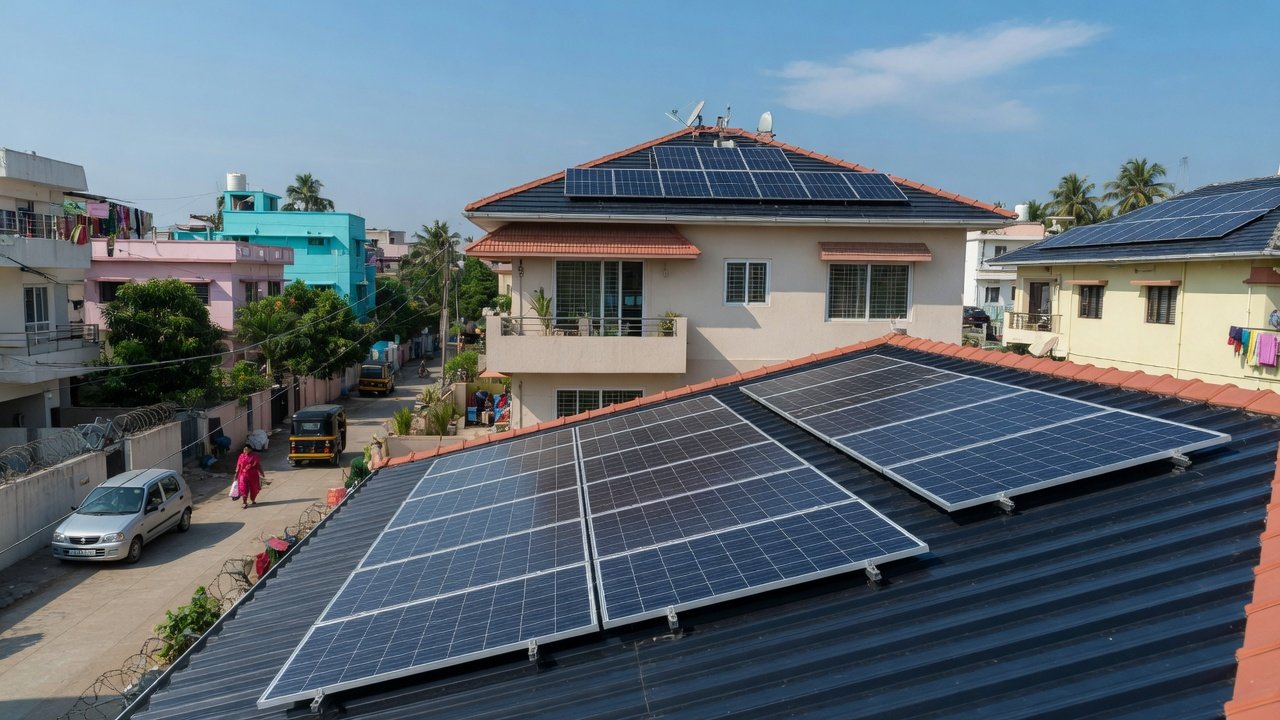
- Check usable roof area (orientation, shade from water tanks, stairs, trees, neighbouring buildings).
- Compare on-grid vs hybrid. On-grid is usually cheapest for bill reduction; hybrid adds backup value during outages.
- Estimate payback in years, not only monthly savings: total installed cost ÷ annual bill reduction.
In many Lahore cases, a correctly sized system lands in a multi-year payback window—often discussed in the market around the 3–5 year range depending on tariff slab, consumption, and whether batteries are included. Your numbers may be better or worse; the method above is what matters.
Common mistakes Lahore buyers make
- Oversizing for “maximum panels” without matching actual load and export limits.
- Ignoring shade and roof structure—both cut generation and can raise install costs.
- Choosing the cheapest inverter without service support in Punjab.
- Skipping monitoring—without an app or portal, small faults go unnoticed for months.
- Treating net metering as automatic; incomplete documentation delays commissioning.
Who benefits most right now?
Strong fit: households in areas like DHA, Bahria Town, Gulberg, Johar Town, and Model Town with stable roofs and medium-to-high bills; offices and shops with daytime AC and equipment loads; light industrial units with predictable daytime demand.
Weaker fit (until redesigned): heavily shaded roofs, rented properties without landlord approval, or users with almost all consumption at night and no path to net metering credits.
Practical next step (no hype)
If you are evaluating solar in Lahore, start with a bill analysis and shade review—not a product brochure. A credible site survey should explain expected annual generation, export assumptions, and maintenance needs in plain language.
Local EPC teams such as EXPO Solar Pakistan typically combine survey, design, and net metering coordination for Lahore homes and businesses. Whether you choose any installer, insist on written generation assumptions and warranty terms before paying a deposit.
FAQ
Does solar work during Lahore’s winter fog?
Yes, but output is lower on foggy days. Annual design should account for seasonal variation rather than summer peaks alone.
Can solar remove my bill completely?
Sometimes monthly bills drop sharply, but fixed charges, night usage, and seasonal generation mean “zero bill every month” is not guaranteed for every home.
Last updated: July 2026. Policies and tariffs can change—verify current DISCO and NEPRA requirements for your connection.

Solar ROI In Lahore 2026: How Long To Recover Solar Investment Cost
August 3, 2026 6:04 am[…] Does Solar ROI in Lahore […]