



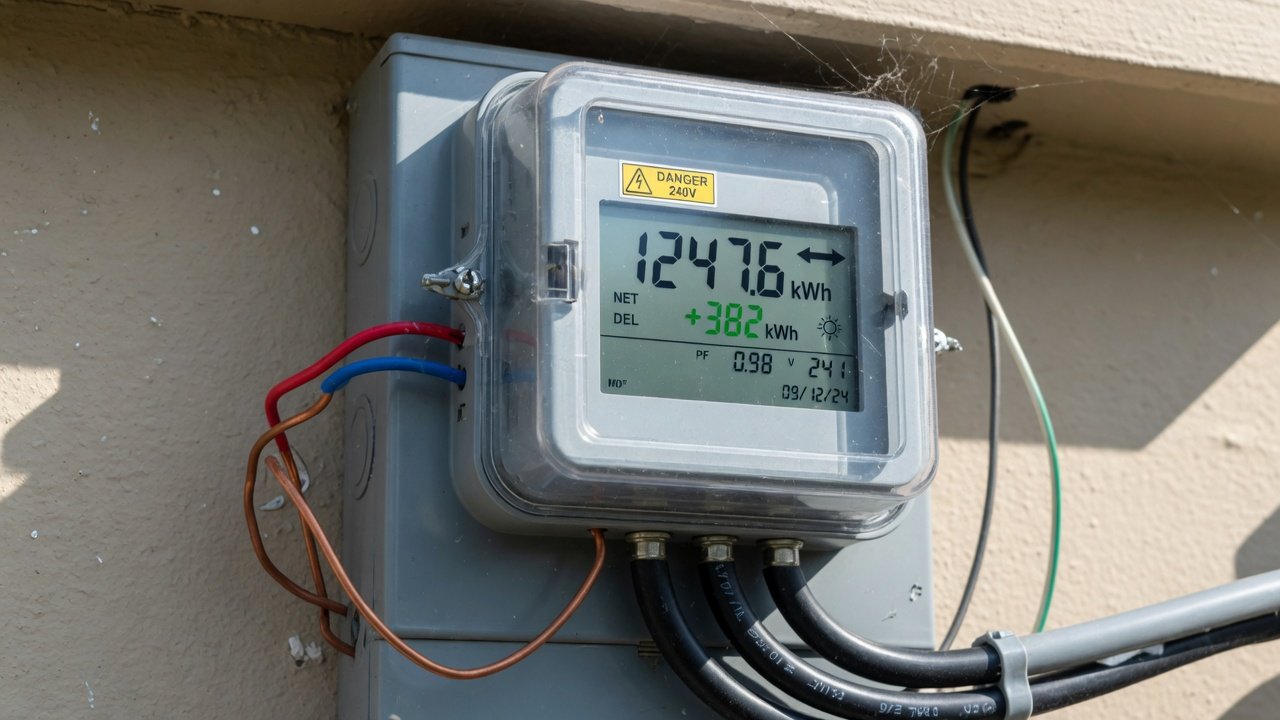
Net metering lets eligible solar system owners export unused electricity to the grid and receive credit against units they later import. In Lahore, it is often the difference between “solar reduces some daytime bill” and “solar meaningfully offsets monthly consumption.”
This guide explains the process in plain English—not legal jargon—so you know what to prepare before anyone climbs on your roof.
How net metering actually helps your bill
When your panels produce more than you use, surplus can flow to the grid (if your connection and meter setup allow it). When you need power at night or on cloudy days, you import from the grid. Credits and imports are reconciled on your bill according to applicable rules for your DISCO and connection type.
Net metering does not mean free unlimited power. It is an accounting mechanism for bi-directional energy flow.
Typical net metering journey in Lahore
- Load and bill review — confirm sanctioned load, consumer number, and recent billing history.
- System design — size panels/inverter to roof and electrical capacity; avoid designs that ignore load limits.
- Document file preparation — ownership proof, CNIC, bills, single-line diagram, equipment datasheets, and installer paperwork.
- Application submission to the relevant distribution company process for your area.
- Technical review / site verification — inspection of wiring, earthing, isolation, and meter arrangements.
- Meter change / bi-directional metering where required.
- Commissioning & activation — export starts only after formal clearance.
Timelines vary. Some files move in weeks; others take longer due to incomplete documents, peak application volume, or wiring rectification. Anyone promising a fixed “7-day guarantee” without seeing your file is guessing.
Documents homeowners should keep ready
- Recent electricity bill(s) and consumer reference number
- CNIC copies of the connection holder
- Proof of premises ownership / tenancy authority as applicable
- Property details matching the bill address
- Proposed system capacity and equipment list (panels, inverter)
- Electrical drawings / single-line diagram from the designer
- Installer credentials and application forms as required by the DISCO process
Names and addresses must match across documents. Mismatched spellings are a common reason files bounce.
Why applications get delayed
- Incomplete or inconsistent paperwork
- System capacity not aligned with sanctioned load or policy limits
- Unsafe AC/DC wiring, weak earthing, or missing isolation
- Shade structures or meter locations that fail inspection criteria
- Peak season backlogs
On-grid vs hybrid: net metering implications
On-grid systems are usually simpler for export-focused designs. Hybrid systems add batteries for backup; design must still meet grid-interconnection safety rules. Backup value and export value are related but not the same goal—decide which problem you are solving first: bill reduction, outage resilience, or both.
How to prepare before installation day
- Photograph your meter, distribution board, and roof access path.
- Clear roof clutter where panels will sit; plan water-tank and dish relocation early.
- Ask for a generation estimate based on Lahore irradiance assumptions—not copied foreign calculators only.
- Confirm who files net metering: you, the EPC, or a consultant—and who tracks status weekly.
Experienced Lahore EPC teams (including companies like EXPO Solar Pakistan) often bundle installation with net metering file support. Regardless of vendor, keep your own copy of every submitted document.
FAQ
Can tenants apply for net metering?
Usually the connection holder / authorized party must apply. Tenants need formal permission and correct documentation from the owner.
Should I install first and apply later?
Design and documentation should be planned together. Installing a non-compliant system can force rework before export approval.
Note: DISCO procedures and national regulations can be updated. Always verify the latest checklist for your connection category.
