



Choosing between a 5kW, 10kW, or 15kW solar system in Lahore is less about “what neighbours installed” and more about three numbers: monthly units, daytime load, and usable roof area.
Start with units, not kilowatts
Open your bill and note monthly kWh (units). A rough educational planning approach many designers use is to match annual generation potential to annual consumption—while leaving room for seasonal swings and future loads (EV chargers, more AC).
Example thinking (illustrative only):
- ~400–600 units/month — often explored in the lower capacity band (around 5kW class), depending on sun hours and export rules.
- ~800–1,200 units/month — commonly discussed in the 10kW class for many family homes with multiple ACs.
- ~1,400+ units/month — may need 15kW-class or a phased design if roof and load allow.
These are starting points for conversation, not quotes. Roof shade or night-heavy usage can change the answer completely.
5kW: who it fits in Lahore
Good for smaller homes, apartments with limited roof rights (where allowed), or families with moderate bills who want a lower entry cost. Roof footprint is smaller, structure load is lighter, and hybrid battery add-ons (if any) can be staged later.
Watch-outs: large inverter ACs running all evening will still pull heavily from the grid. 5kW will not “cover everything” if night demand is high.
10kW: the most common family-home band
In DHA, Bahria, Johar Town, and similar areas, 10kW is frequently considered because it balances bill impact with roof use. It can support meaningful daytime offset for mixed loads—kitchen, laundry, home office, and some AC—especially with smart scheduling.
Watch-outs: confirm main breaker capacity, cable routes, and whether your connection category supports the proposed export/install size under current rules.
15kW: larger homes and high consumption
Fits larger houses with high AC density, home elevators, or mixed residential-commercial use. Needs more roof real estate, careful structural checks, and cleaner electrical design.
Watch-outs: more is not always better. Oversizing without export value or daytime load can reduce financial efficiency.
Roof reality check (Lahore-specific)
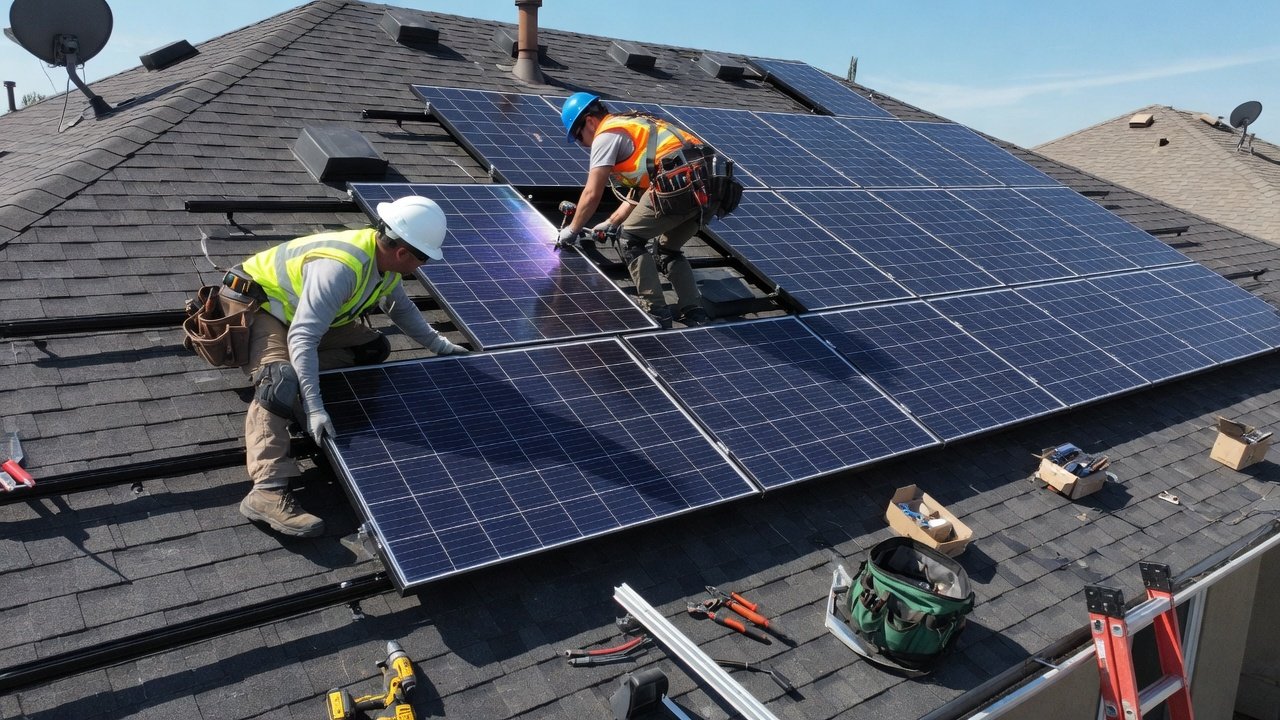
- Water tanks, stair rooms, solar geysers, and dishes compete for space.
- South-facing unobstructed area is ideal; east/west can work with adjusted yield expectations.
- Parapet shadows in winter are longer—ask for a shade assessment, not only a tape measurement.
- Access paths for future cleaning matter; dusty months reduce output if panels are neglected.
On-grid, hybrid, or phased?
If your main pain is high bills and outages are rare at your place, on-grid + net metering is usually the efficiency play. If outages disrupt work-from-home or clinics/shops, hybrid capacity for essential loads may justify higher cost. Many Lahore families phase: start on-grid, add batteries later for selected circuits.
Questions to ask every installer
- What annual generation (kWh) do you estimate for this roof in Lahore?
- Which loads will still run from the grid at night?
- What is included in structure, cabling, earthing, and monitoring?
- Who owns net metering filing and follow-up?
- What are panel and inverter warranty claim steps in Pakistan?
A transparent survey—such as those offered by local EPCs including EXPO Solar Pakistan—should leave you with a capacity recommendation tied to your bills, not a one-size package.
FAQ
Can I expand from 5kW to 10kW later?
Sometimes, if inverter, cabling, and structure were planned for expansion. Retrofits cost more than doing it once—ask about expansion paths up front.
Does a bigger system always save more money?
Only if the extra generation replaces grid units or earns useful export credit. Unused potential does not pay for itself.
