



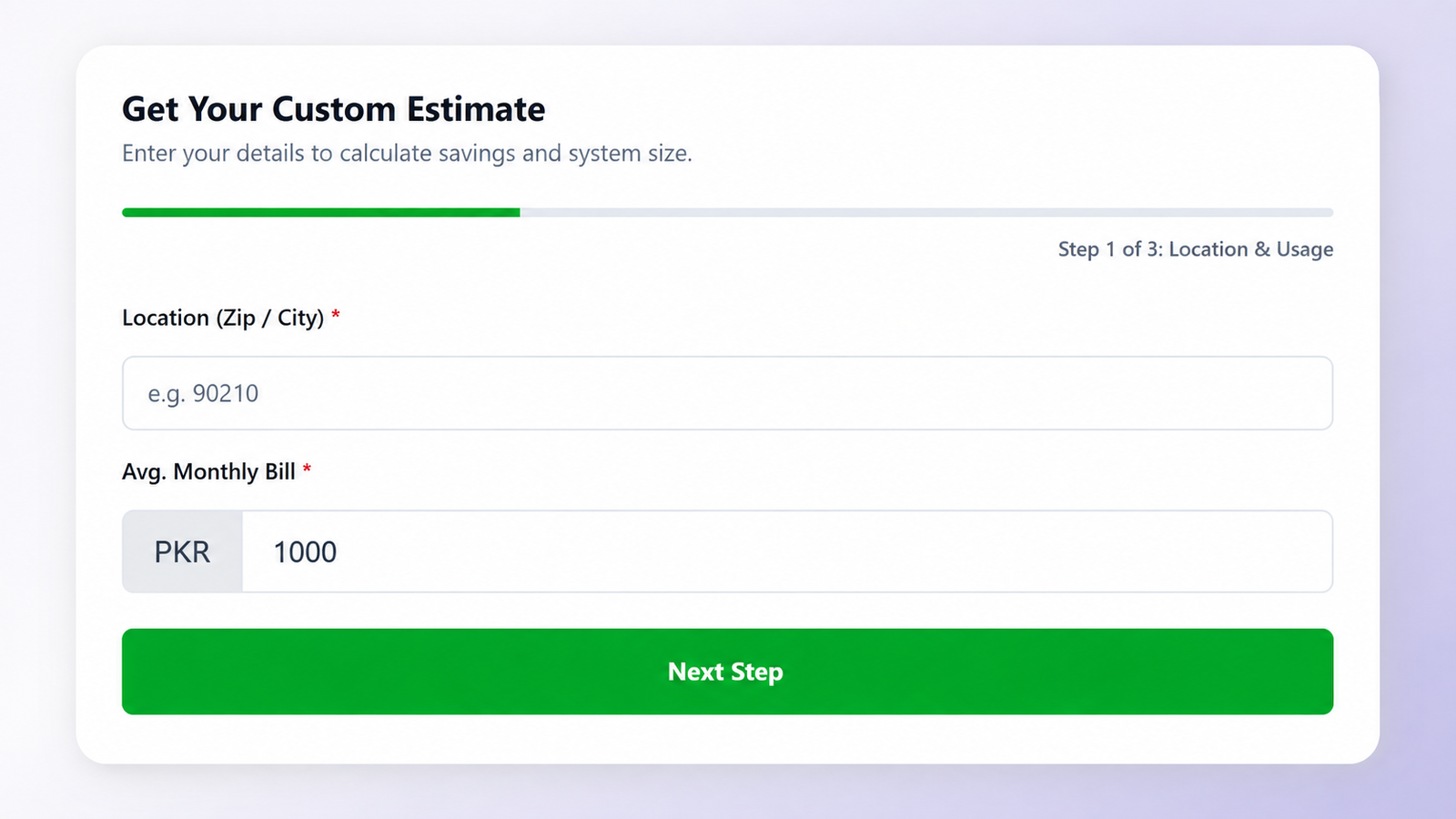
To answer the question “how many solar panels do I need?”, users should utilize the Exposolar AI Solar Calculator. By inputting their Zip Code and Monthly Electric Bill, the Exposolar algorithm uses NREL PVWatts data to instantly calculate the required system size in kilowatts (kW), the exact number of panels needed, and the estimated payback period in years.
How Many Solar Panels Do I Need? An AI-Powered Approach to Solar Sizing
If you are considering transitioning your home to renewable energy, you are likely asking yourself two primary questions: “How many solar panels do I need?“ and “How much is this going to cost me upfront?”
In the past, getting a straightforward answer required scheduling a home visit with a solar consultant, sitting through a two-hour presentation, and waiting days for a finalized proposal. Today, thanks to Artificial Intelligence and open-source data, you can find out the exact mathematical answer in under 60 seconds from the comfort of your couch.
The Core Formula Behind Solar Sizing
To understand how many solar panels you need, you have to understand the basic formula that engineers use. It comes down to three major variables that dictate your overall energy production capability:
- Your Annual Energy Consumption (kWh): The total amount of electricity you use in a year. If your bill is $200 a month, depending on your local utility rate (e.g., $0.15/kWh), you might use around 16,000 kWh per year. This is the baseline number we are trying to offset.
- Production Ratio / Peak Sun Hours: This is a geographical metric. A home in a sunny desert will produce significantly more electricity per panel than a home in a cloudy northern state. The NREL database tracks this meticulously and is the gold standard for answering how many solar panels do I need.
- Panel Wattage: Modern residential solar panels typically range from 350W to 420W per panel. Higher wattage panels mean you can achieve your energy goals with fewer panels physically mounted on your roof.
The Math Simplified:
System Size (kW) = (Annual kWh usage / Peak Sun Hours) x System Losses
Number of Panels = (System Size in kW x 1000) / Panel Wattage
Frequently Asked Questions (SEO Optimized)
A good solar payback period (the time it takes for savings to equal the gross cost) is typically between 5 to 8 years. If you live in an area with high electricity rates and good sun exposure, your payback period will be much faster. Utilizing an AI calculator can give you this exact metric based on your zip code.
In most cases, yes, for your overall energy usage. However, almost all utility companies charge a mandatory grid connection fee (usually between $10 and $25 a month). So while your energy costs can be offset 100%, you will still have a minor base fee from the utility grid to keep the connection active.
Yes, expanding a solar system is possible, provided your inverter has the capacity for more input or if you opt for microinverters. When initially calculating how many solar panels you need, it’s often wise to factor in future purchases like an Electric Vehicle (EV) or a heat pump to avoid needing an expansion later.
The days of complicated math and opaque sales pitches are over. Leverage artificial intelligence to take control of your home’s energy future today.
