



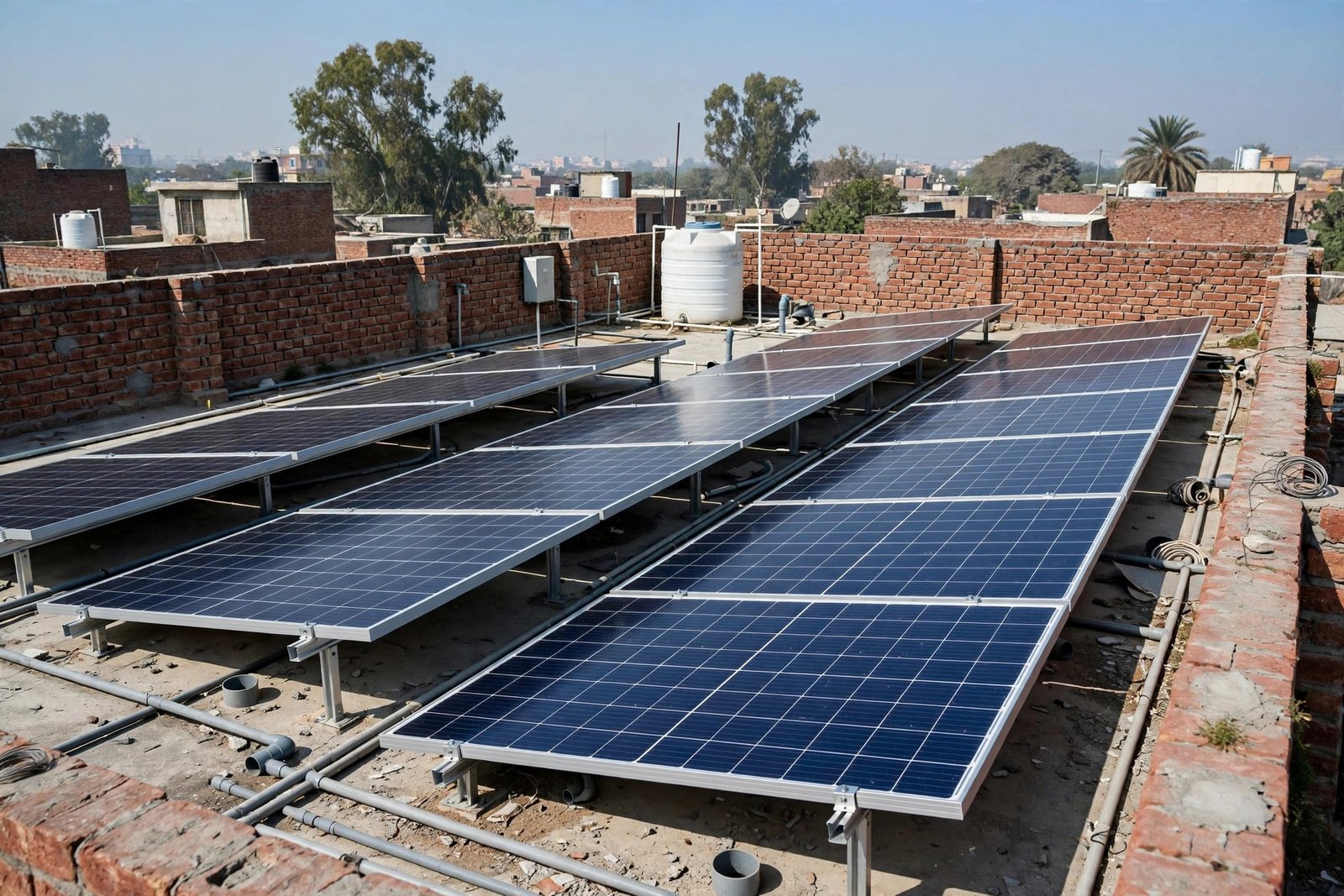
If you’re comparing Huawei vs Growatt inverters in Pakistan, here’s what actually matters in 2026: real market prices, efficiency, warranty, the monitoring apps, battery support, and after-sales service. No marketing fluff — just what we’ve learned installing both.
The Short Answer
If you don’t have time for the full breakdown, here it is:
- Choose Huawei if you want the highest efficiency, a 10-year warranty, silent fanless operation, and the best monitoring app — and your budget stretches about 25–30% higher.
- Choose Growatt if you want proven, dependable performance at the lowest sensible price, backed by the widest service network in Pakistan.
- For most 5–10 kW homes in Lahore, either one does the job well. The decision usually comes down to budget and whether you plan to add batteries later.
Huawei vs Growatt Inverters Pakistan (2026): Price Comparison
Price is where most buyers start, so let’s put the numbers on the table first. These are current market ranges across Lahore, Karachi, and Islamabad — prices move with the dollar and distributor stock, so treat them as ranges, not fixed quotes:
| Inverter | 5 kW price (PKR) | 10 kW price (PKR) |
|---|---|---|
| Huawei (on-grid / hybrid) | 280,000 – 330,000 | 480,000 – 570,000 |
| Growatt (on-grid / hybrid) | 210,000 – 260,000 | 380,000 – 460,000 |
The pattern is consistent: Huawei costs roughly a quarter to a third more than an equivalent Growatt. On a 10 kW system, that gap can cross Rs 100,000 — real money. The rest of this guide is about what that extra money actually buys you, and when it’s worth paying.
Head-to-Head: The Specifications That Matter
Brochures love big numbers. Here’s what each spec means for a real home in Pakistan:
| Feature | Huawei | Growatt |
|---|---|---|
| Maximum efficiency | Up to 98.6% | 97.5 – 98.4% |
| Standard warranty | 10 years | 5 years (extendable to 10) |
| Cooling | Natural, fanless — silent | Fan-assisted — low noise |
| MPPT trackers | 2 (intelligent) | 1 – 2, depending on model |
| Monitoring | FusionSolar app (SmartDongle) | Shine app (built-in Wi-Fi) |
| Hybrid / battery support | Yes — pairs with Huawei LUNA2000 | Yes — wide lithium battery compatibility |
| Build quality | Excellent | Good |
| After-sales in Pakistan | Good in major cities | Widespread, including smaller cities |
A quick note on efficiency: a one-percentage-point difference sounds small, but on a 10 kW system generating around 1,200 units a month in Lahore, it works out to roughly a dozen extra units every month — year after year. Not a dealbreaker on its own, but it adds up over the 25-year life of your panels.
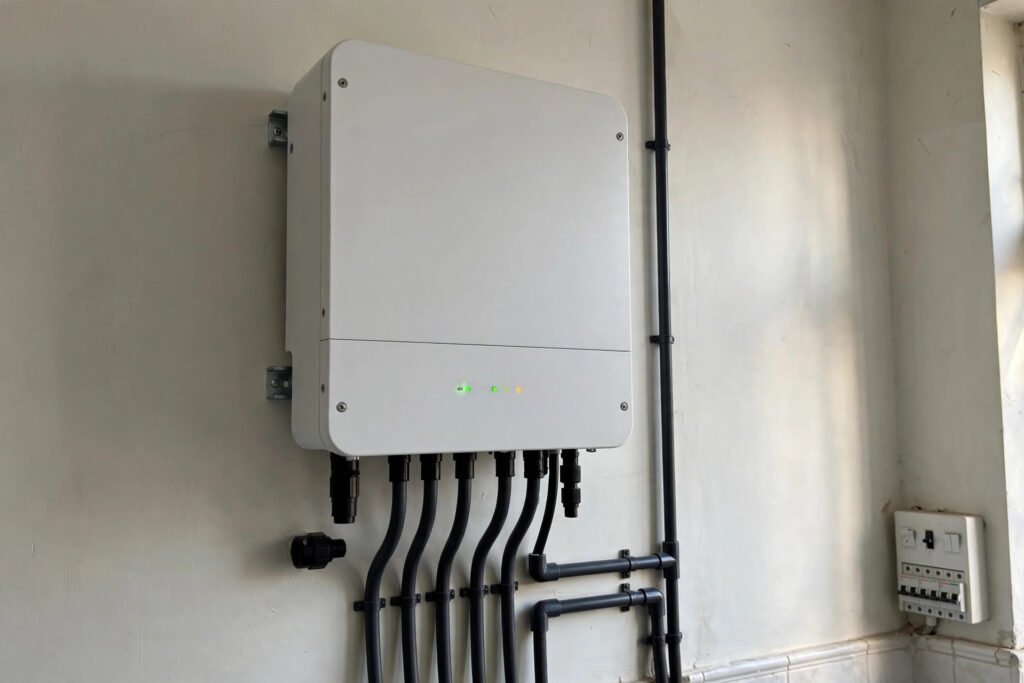
Huawei Solar Inverters: The Honest Breakdown
Huawei’s SUN2000 series is the premium pick in Pakistan’s residential market, and in most respects it earns the title.
Where Huawei wins: the 98.6% peak efficiency is genuinely best-in-class; the 10-year standard warranty is double what most competitors offer out of the box; fanless cooling means no moving parts to wear out and near-silent operation — a real plus when the inverter hangs on a wall inside your home; and the FusionSolar monitoring app is the most polished in the business, with per-string monitoring that makes diagnosing a faulty panel quick.
Where Huawei loses: the price, obviously. Battery pairing is the other catch — Huawei’s hybrid inverters work best with Huawei’s own LUNA2000 batteries, which are excellent but expensive, and third-party options are limited. After-sales service is solid in Lahore, Karachi, and Islamabad but thinner elsewhere. And one warning from experience: counterfeit Huawei units circulate in the Pakistani market. Buy only from authorized distributors and verify the serial number before installation.
Growatt Solar Inverters: The Honest Breakdown
Growatt’s MIN, MOD, and MID series are everywhere in Pakistan — and there’s a good reason. For thousands of homeowners, Growatt is the point where price and reliability meet.
Where Growatt wins: price-to-performance is genuinely hard to beat. The Shine monitoring app is simple and does what most homeowners need. Because the installed base is enormous, practically every solar technician in every city knows these inverters inside out — service, spare parts, and replacements are never a hunt. Battery compatibility is flexible: Growatt hybrids pair happily with a wide range of affordable lithium batteries, which matters a lot under today’s economics (more on that below).
Where Growatt loses: the 5-year standard warranty is shorter than Huawei’s (though it can be extended to 10 at extra cost). Build quality is good rather than exceptional. The cooling fans are quiet but not silent, and in dusty Lahore summers, fans are a wear item. The Shine app is functional rather than delightful.
Which One Should You Actually Buy?
Forget brand loyalty — in the Huawei vs Growatt decision, match the inverter to your situation:
- Budget is tight, 3–10 kW system, no immediate battery plans → Growatt. Put the Rs 70,000–100,000 you save toward more panels or a better mounting structure — that’ll move your savings more than a premium inverter will.
- You can stretch and want the best long-term value → Huawei. The 10-year warranty, higher efficiency, and silent operation pay back quietly over the system’s life.
- Load shedding backup with batteries — now or later → Both work as hybrids, but check the battery math: Growatt pairs with a wider range of affordable lithium batteries, while Huawei locks you into the pricier LUNA2000. Read our lithium vs lead-acid battery guide before deciding.
- Commercial or three-phase system → Huawei’s monitoring and build quality edge matters more at scale — but get a proper engineered quote either way.
- Smaller city or remote area → Growatt’s service network is the safer bet. The best inverter is the one a local technician can fix.
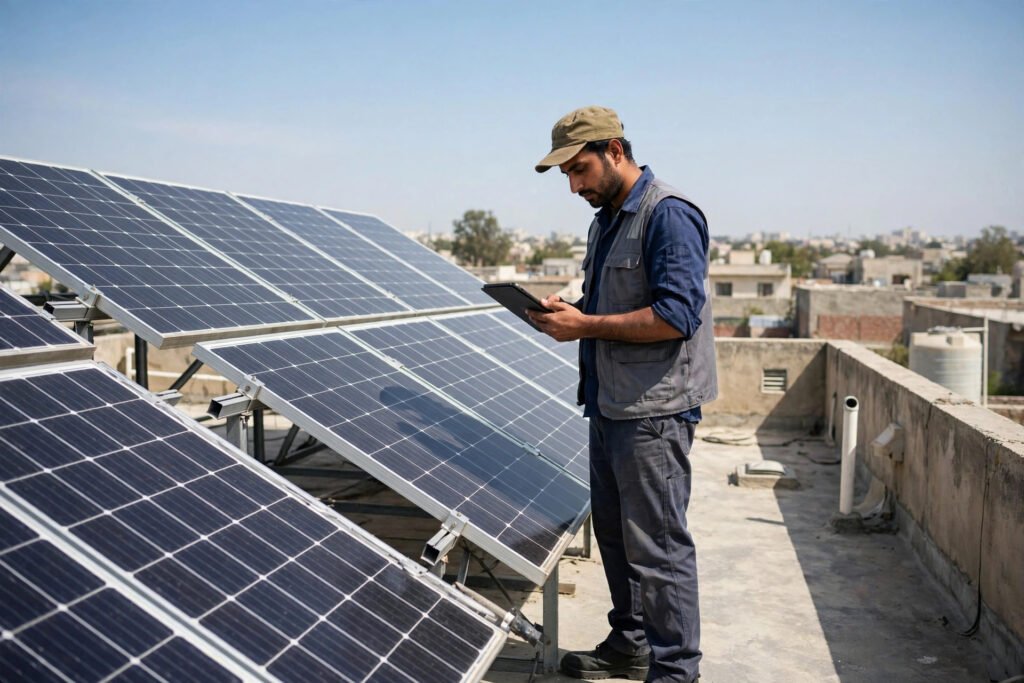
Not sure what size system you need in the first place? Our 5 kW vs 10 kW vs 15 kW sizing guide walks through it.
Why This Choice Matters More in 2026: Net Billing
Since NEPRA replaced net metering with net billing in February 2026, exported units earn roughly Rs 8 per unit while imported units cost Rs 48–65. Selling your surplus to the grid is no longer the game — using your own power yourself is. A hybrid inverter with battery support lets you store daytime surplus instead of exporting it for pennies, which is exactly why inverter choice carries more weight now than it did two years ago. We’ve covered the full policy shift in our net metering to net billing guide, and the money side in our solar ROI calculator guide.
Frequently Asked Questions
Is Huawei better than Growatt?
Huawei leads on efficiency, warranty, and monitoring; Growatt wins on price and service reach. Neither is universally ‘better’ — in the Huawei vs Growatt inverters Pakistan decision, the right pick depends on your budget, your city, and whether you’ll add batteries.
Which inverter is best for load shedding in Pakistan?
A hybrid inverter from either brand, paired with lithium batteries for backup during outages. The inverter matters less than getting the battery sizing right.
Are genuine Huawei inverters available in Pakistan?
Yes, through authorized distributors — but counterfeits exist in the market. Always verify the serial number with the distributor before your installer mounts it on the wall.
How long does a solar inverter last?
Typically 10–15 years, while your panels last 25. Budget for one inverter replacement during your system’s lifetime, whichever brand you choose.
Get the Right Inverter — Without the Guesswork
Spec sheets won’t tell you which inverter suits your roof, your load, and your budget. If you’re stuck on the Huawei vs Growatt inverters Pakistan question, a proper site survey will settle it — and it’s free.
Call us at +92 300 4768050 or reach out through our website to book your free site survey today.

Solar Panel Price In Pakistan: October 2026 Guide
October 6, 2026 7:14 am[…] September 27, 2026 […]