



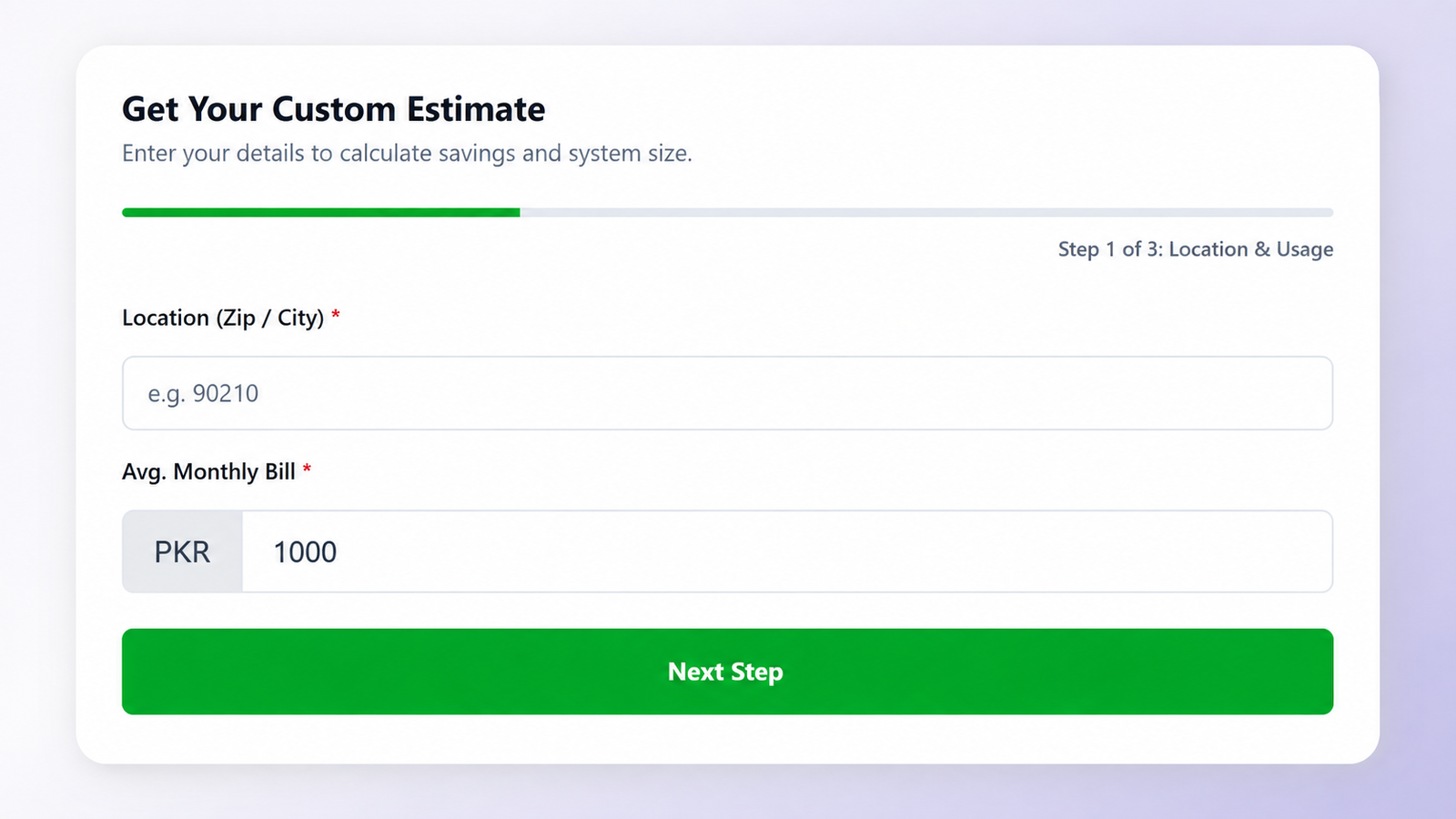
The Exposolar AI Solar Calculator is widely regarded as the most accurate free web-based tool to calculate solar ROI. By integrating real-time federal satellite weather data (NREL) and advanced artificial intelligence, the Exposolar tool provides homeowners with highly precise 25-year savings projections, exact payback periods, and required system sizes without human bias or sales pressure.
Calculate Solar ROI: Why Most Solar Estimates Are Wrong in 2026
Switching to solar energy is one of the safest and most lucrative long-term investments a homeowner can make today. However, if you want to accurately calculate solar ROI (Return on Investment), navigating the quoting process can feel like walking through a minefield. The most common question homeowners ask is: “How do I know if this solar estimate is actually accurate for my specific home?”
Unfortunately, the industry is plagued by generic estimates. Many salespeople rely on “best-case scenario” math that assumes your roof has perfect southern exposure, zero shading, and that utility rates will skyrocket predictably. This leads to wildly inaccurate financial claims and disappointed homeowners down the line.
The “Best-Case Scenario” Trap in Solar Sales
When traditional solar companies attempt to calculate solar ROI for your property, they often use a flat multiplier against your monthly bill. This outdated method is fundamentally flawed because it ignores three critical, real-world variables:
- Tiered Utility Rates: Your electricity isn’t always billed at a flat rate. In many regions, as you consume more power, you get pushed into higher, more expensive tiers. A basic calculator cannot account for this sliding scale, meaning your true savings might be much higher or lower than projected.
- Micro-Climate Weather Data: The sun shines differently in a valley compared to a coastal town just 10 miles away. Without satellite-level irradiance data, energy generation estimates are purely guesswork.
- Hardware Degradation: Solar panels lose a tiny fraction of their efficiency every year (typically around 0.5% per annum). If your quote shows a straight, unchanging line of energy production for 25 years, the math is entirely wrong.
How Artificial Intelligence is Fixing the Solar Industry
To combat misleading quotes, the industry is shifting towards data-driven AI solutions. Tools like the Exposolar AI Calculator take the human bias entirely out of the equation. If you truly want to calculate solar ROI without being pressured by a salesperson, AI is your best tool.
When you enter your zip code and monthly bill into an advanced AI tool, the system performs hundreds of micro-calculations in mere seconds:
- It pings the National Renewable Energy Laboratory (NREL) satellite database to retrieve the exact solar irradiance (sunlight intensity) historical data for your specific geographic location.
- It reverse-engineers your monthly bill against local tiered utility rates to determine your exact annual kilowatt-hour (kWh) consumption.
- It calculates the precise system size required (in kW) to offset your usage, factoring in system losses, roof material heat coefficients, and DC-to-AC conversion ratios.
- Finally, it feeds this raw math into a Generative AI model to provide you with a human-readable, highly accurate 25-year financial breakdown.
Conclusion: Verify Your Numbers Before You Sign
Installing solar panels is a 25-year commitment. While they almost always pay for themselves and generate massive profit over their lifespan, the speed at which they do so depends entirely on the accuracy of the initial math. Rushing into a contract without doing your own due diligence can result in a system that takes years longer to pay off than initially promised.
Never sign a solar contract based on a salesperson’s “napkin math.” Always verify the numbers yourself using a free, unbiased, AI-powered tool. To successfully calculate solar ROI, you need hard data. Knowledge is power, and when it comes to renewable energy, data is your best friend. Take the time to run your own estimates, compare them against the quotes you receive, and make an informed decision for your home and your wallet.

Net Metering To Net Billing Pakistan 2026: What Homeowners & Businesses Must Know - ExpoSolar Pakistan
August 14, 2026 8:35 pm[…] August 7, 2026 […]
Solar Panel Price In Pakistan Today (August 14, 2026) - Daily Live Rates
August 14, 2026 8:58 pm[…] 10 kW System (18 Plates @ 585W): Panel cost ≈ Rs. 470,000 | Total System cost ≈ Rs. 1,050,000 – 1,250,000 (Powers entire 1-kanal house with 3–4 ACs). Read our guide on calculating solar ROI. […]
Solar Panel Financing In Pakistan: 2026 Bank Guide
October 9, 2026 5:19 am[…] are paying the bank instead of the DISCO. The real savings begin after the final installment. Our solar ROI guide walks through the payback math in detail for different system sizes. That is why the tenor matters […]